
From rankings to citations: what AI search means for your SEO
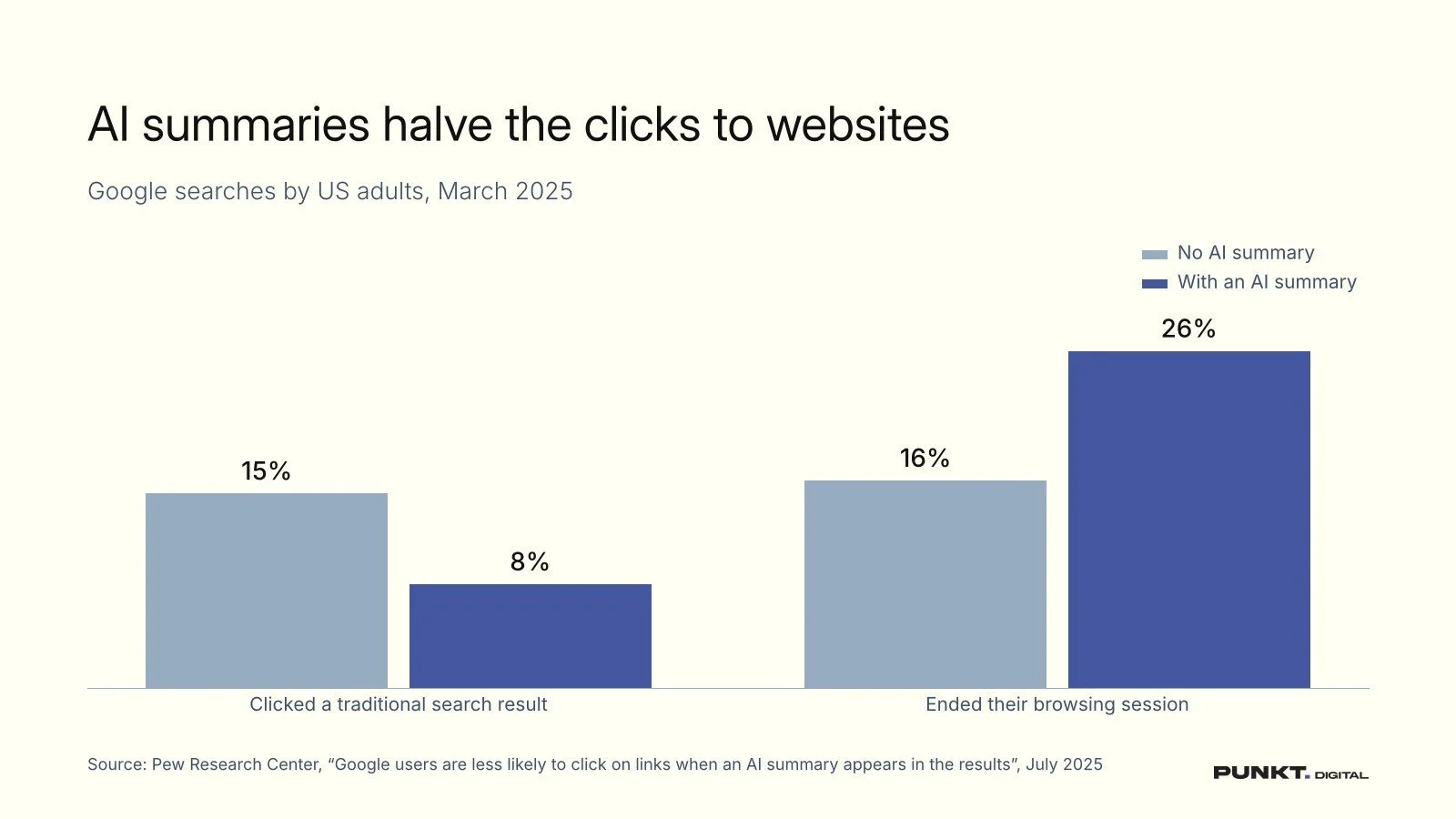
Source: Pew Research Center, July 2025.
Search used to be a list of ten blue links. Now it's an answer - and only two or three businesses get named in it.
- 58.5% of searches end without a click to any website, and results carrying an AI Overview see a click rate of around 8%.
- AI Overviews now appear on 82% of B2B queries.
- Google still sends 63.41% of all web referral traffic, so a change to Google's results page is a change to where discovery starts.
How an AI answer is built: it interprets the question, retrieves candidate sources, extracts short passages (favouring claims repeated across independent sources), then names two or three of them.
What earns the citation: clear, extractable answers; E-E-A-T signals; specific, verifiable experience; structured data (only 12.4% of domains use schema); freshness (AI cites content ~25.7% newer than classic results); and third-party validation - brands appear 6.5x more often via third-party sources than their own sites.
The good news: Google has confirmed there's no separate AI playbook. Good SEO is still the foundation - the bar is just higher, and the scoreboard now includes citations.
Sources: Omnibound (2026); Datos & SparkToro; BrightEdge.