
Google’s 17 August change: how to manage your target CPA now
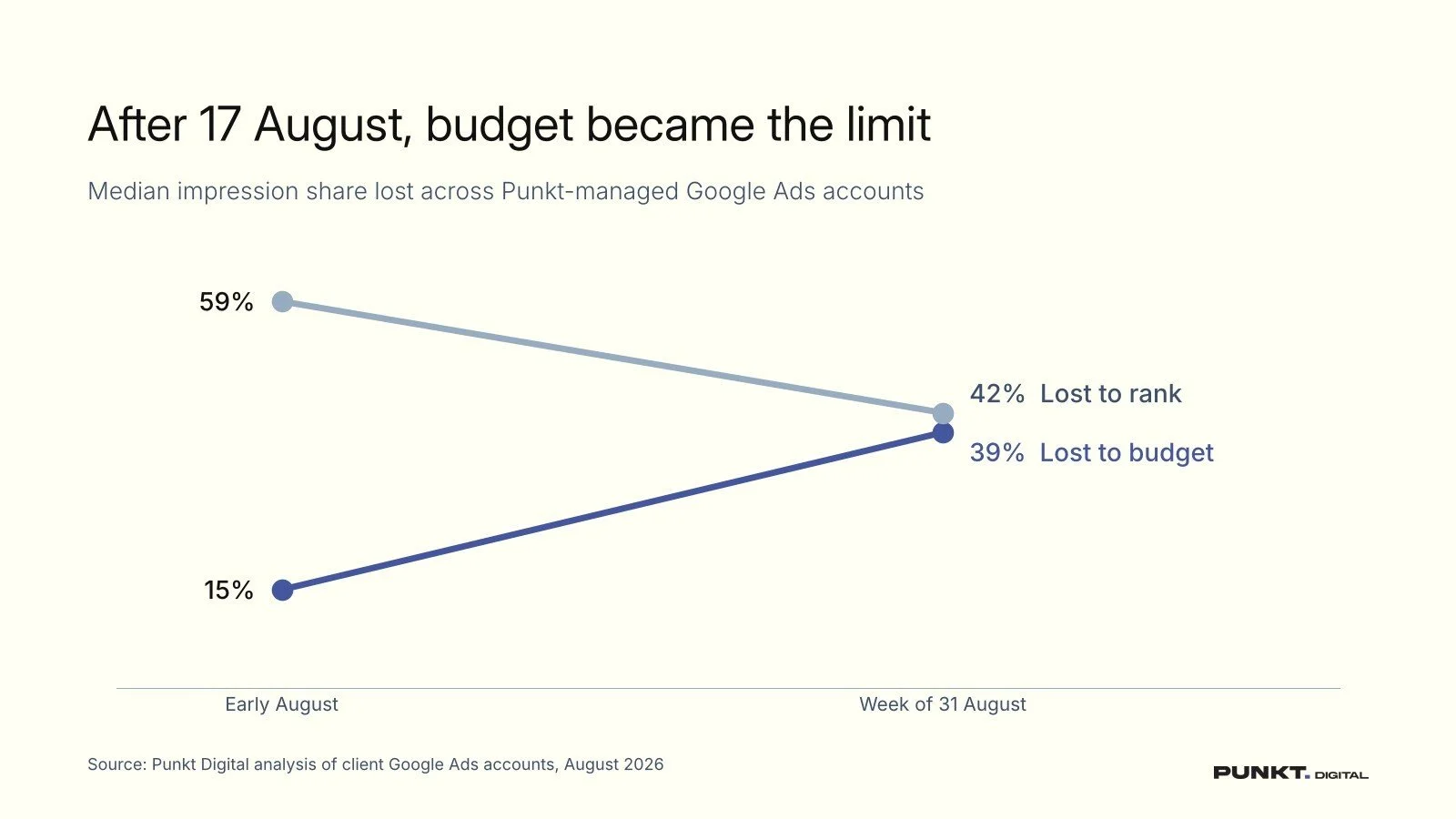
Source: Punkt Digital analysis of client Google Ads accounts, August 2026.
From 17 August 2026, budget-limited campaigns on Target CPA or Target ROAS optimise much more closely to the target you set, rather than outperforming it.
Why it matters: many advertisers set an inflated tCPA (say $50 while achieving $35) to keep spend efficient within budget. That workaround is gone - your target is now treated as what you actually want to pay.
What we actually saw: once things settled, we pulled impression share for every Google Ads account we manage.
- Impression share lost to budget jumped: the median account went from around 15% in early August to 39% by the week of 31 August.
- Over the same weeks, impression share lost to rank fell from 59% to 42%.
- It isn't seasonal. In the same weeks of 2025, budget loss barely moved.
- Nearly all of it is Performance Max. PMax campaigns that were already budget-capped went from losing 22% of impressions to budget to losing 66%, and their search impression share halved. Spend stayed basically the same.
That's exactly what Google said would happen: budget-limited campaigns now bid to the target instead of under it. You pay more to win auctions you used to lose on rank, so the budget runs out earlier in the day.
What to do
1. Find affected campaigns - budget-limited Search, Shopping, Performance Max, Demand Gen and Travel. Start with capped PMax.
2. Compare what each campaign actually delivered in July with the target it's set to. It will now head towards the target you set.
3. Reset targets deliberately to real business goals, or lift the budget if the higher bids are worth it.
4. Watch impression share lost to budget vs rank, and give changes time to settle before judging.